Details matter.
A professional wrap is more than changing the color of a car. The quality of the installation shows up in the edges, the seams, the contours, the finishing and the final inspection.
We don’t consider the installation finished simply because the film is on the vehicle.
The film is only part of the job.The installation is the craft.
Material matters. Technique matters. Preparation matters. Finishing matters. Inspection matters.
Ten places an install shows its quality.
Edges
Film should be appropriately positioned and finished at applicable edges.
Seams
Seams should be intentionally placed and properly finished for the project.
Corners
Corners and transitions get specific attention.
Handles
Handle areas require careful installation and finishing.
Mirrors
Mirror surfaces and the areas around them need appropriate contour and edge work.
Bumpers
Complex bumper geometry requires controlled installation technique.
Contours
Curves and compound shapes require appropriate film handling and finishing.
Trim areas
Trim and the surfaces around it are reviewed for appropriate coverage and finish.
Post-heating
Appropriate areas receive professional finishing and post-heating according to the material and installation requirements.
Overall appearance
The vehicle is inspected as one complete finished project.
Not every area is treated identically on every vehicle. What a panel needs depends on its geometry, the film and the condition it arrived in.
Look closer.The edge tells you a lot.
Professional installation comes down to how film terminates around edges and transitions. It is the first thing that fails on a rushed install and the easiest thing to check on someone else’s.
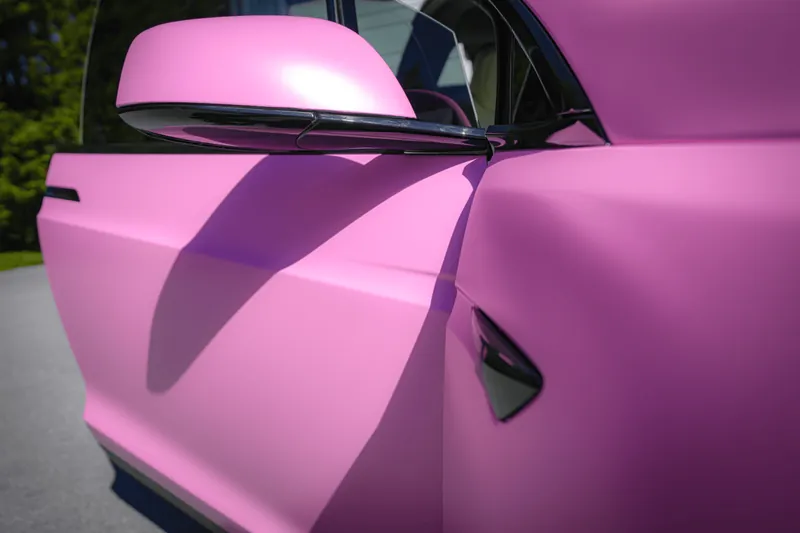
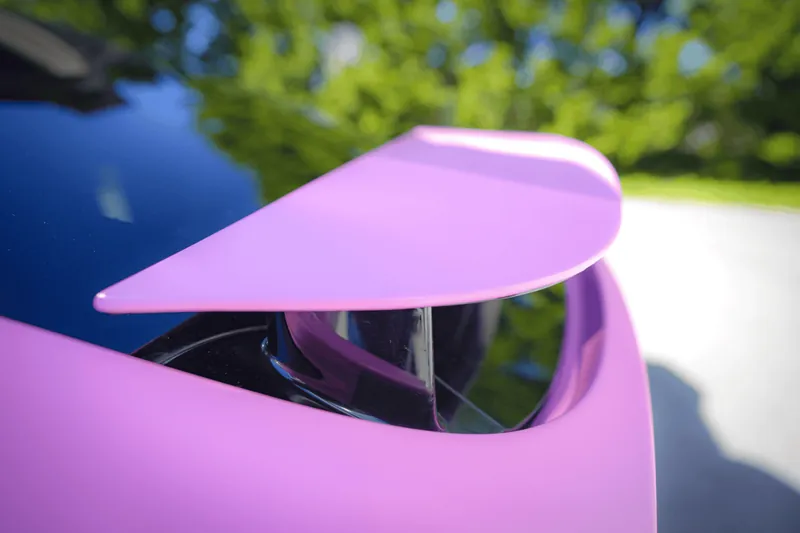
Seams should be intentional.
Where a seam goes depends on panel geometry, the design, the material, the film width, the vehicle and the installation requirements.
- Panel geometry
- Design
- Material
- Film width
- Vehicle
- Installation requirements
- Visual considerations
What we won’t claim
Not every vehicle can be wrapped without seams, and we won’t claim a seam is always invisible. The goal is that seams are placed and finished deliberately, not wherever the film ran out.
Curves aren’t flat.
Vehicles are full of curves, recesses, deep contours, compound surfaces and tight transitions. Film does not naturally want to lie across any of them.
- Curves
- Recesses
- Deep contours
- Compound surfaces
- Tight transitions
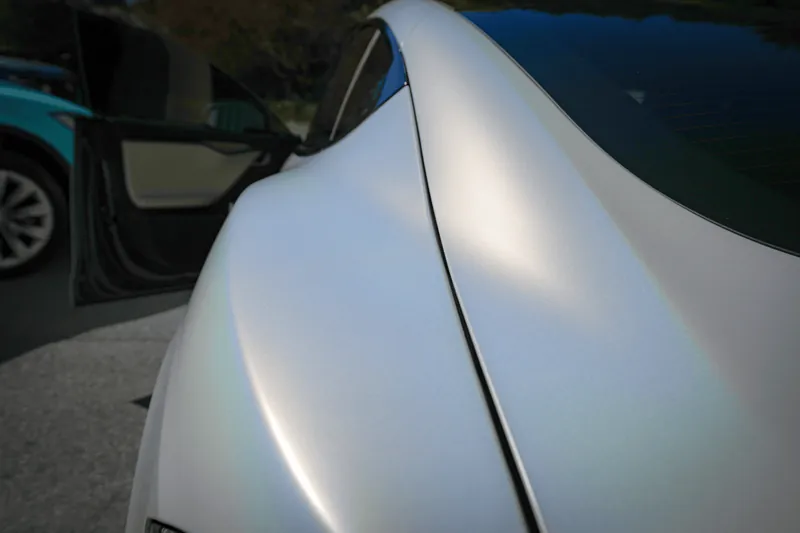
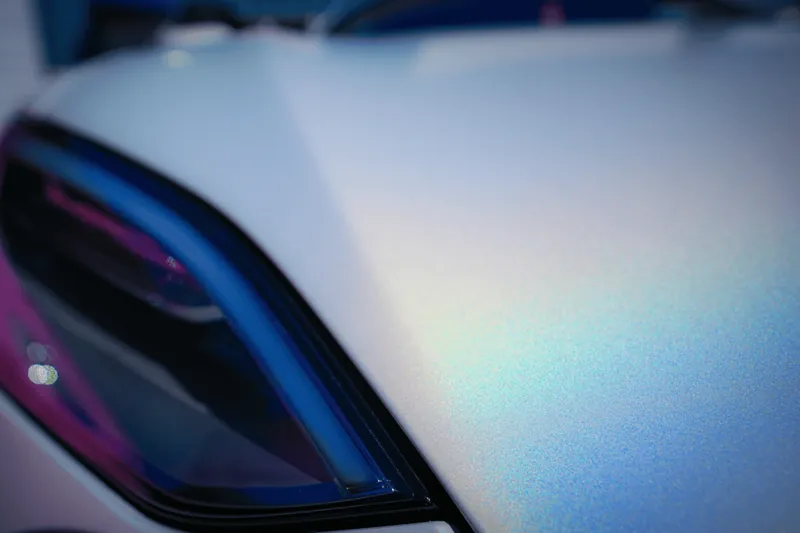
The craft, not the transformation.
The portfolio shows finished cars. This shows the parts of them that decide whether the install holds up.
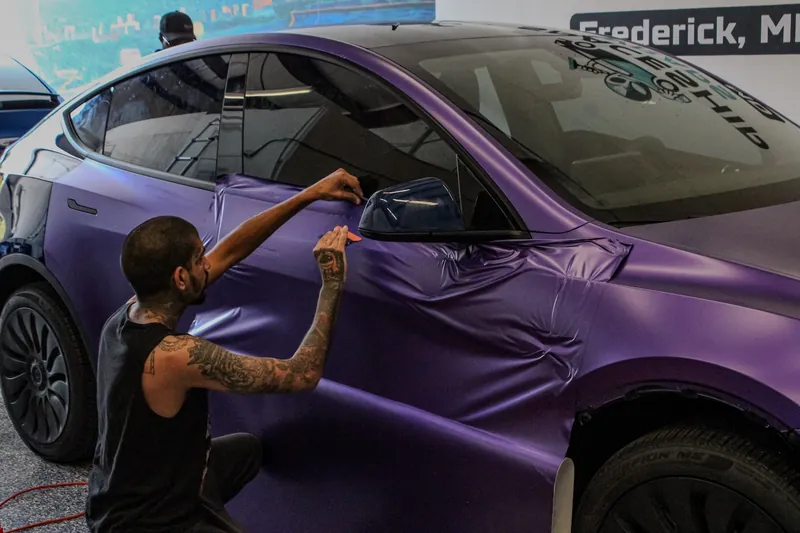
Every photograph here is our own work. We’ll keep adding as we shoot more — the gaps stay gaps rather than getting filled with someone else’s.
Each one is difficult somewhere different.
Different shape. Different challenges.
Large flat panels and hard folds. Flats show every mistake, and the folds decide whether the install reads as sharp or soft.
- Large panels
- Sharp geometry
- Panel transitions
- Edges
- Corners
- Finishing
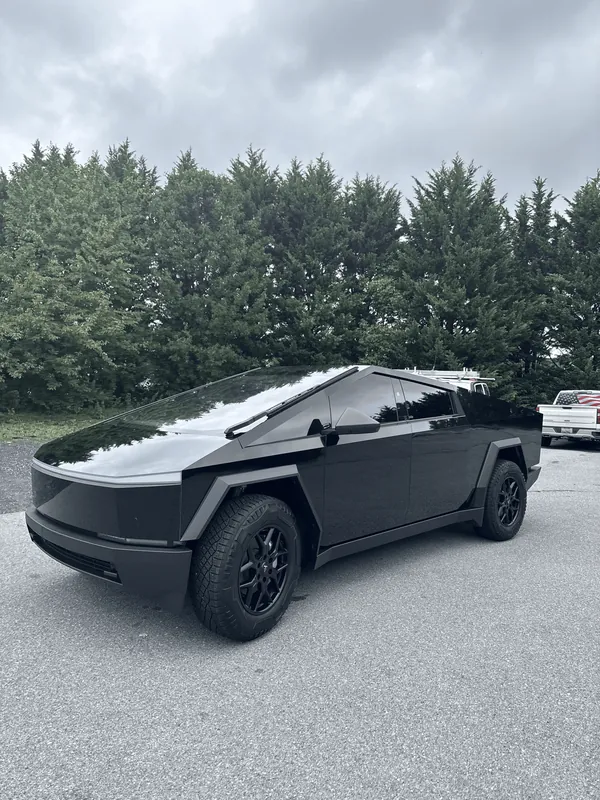
Clean lines. Complex details.
A simple-looking car whose difficulty is concentrated in small areas — handles, mirrors, the bumper corners.
- Panel transitions
- Curves
- Handles
- Mirrors
- Bumpers
- Edges
- Finishing
Every curve has to be accounted for.
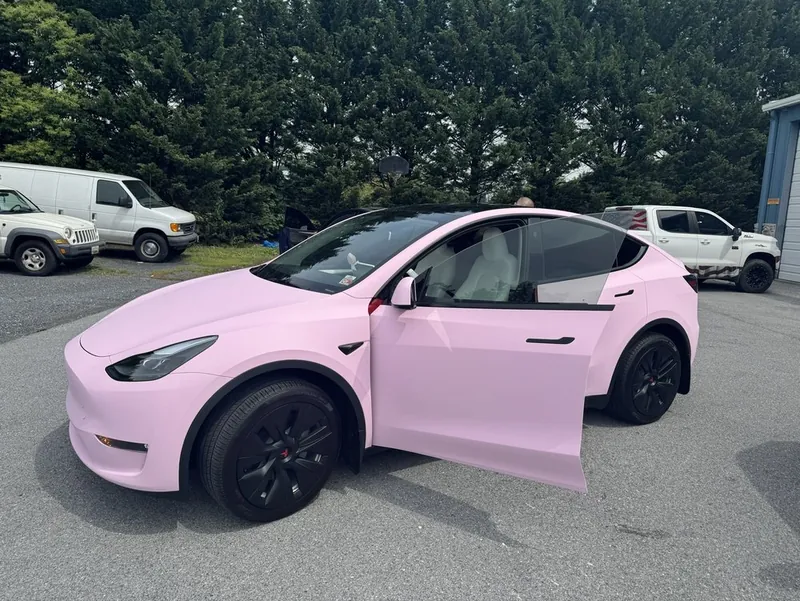
More continuous curvature than the 3, and a rear quarter that punishes a rushed hand.
- Curves
- Bumpers
- Mirrors
- Handles
- Edges
- Panel transitions
- Finishing
Great material still needs great installation.
3M and Avery Dennison make professional automotive films. The material does not install itself, and it does not rescue a poor install.
SpaceShip Wraps automotive installers are required to have professional experience with 3M and/or Avery Dennison automotive wrap films.
That is a hiring requirement we verify, not a manufacturer certification. SpaceShip Wraps is not certified, sponsored or endorsed by any film manufacturer.
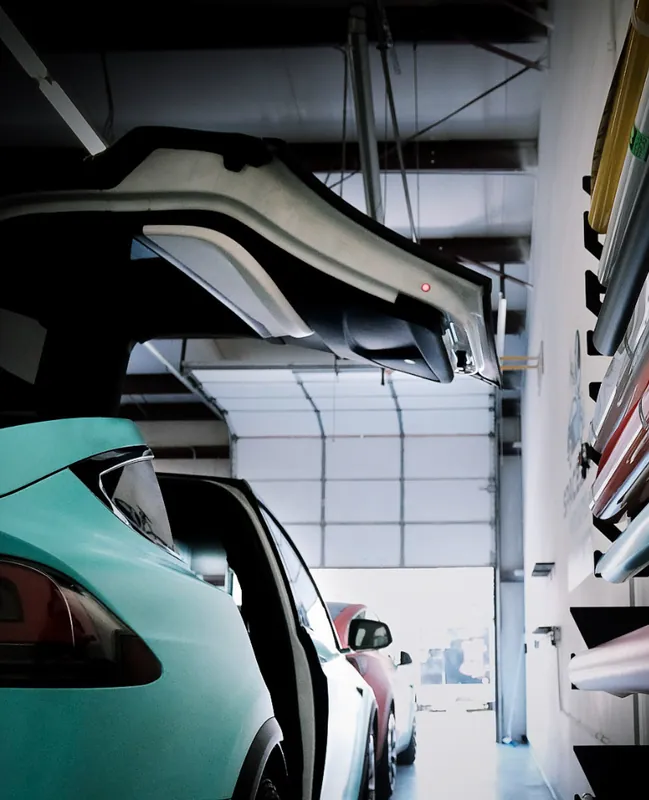
Then we inspect it.
Film
- Alignment
- Coverage
- Visible defects
- Wrinkles
- Bubbles
- Edge finish
- Seam finish
- Contours
- Adhesion concerns
- Post-heating and finishing
Vehicle
- Relevant components accounted for
- Trim properly seated where applicable
- Cameras and sensors not visibly obstructed
- No obvious installation-related concerns
- Condition reviewed against the intake record
Project
- Scope completed
- Material matches the project
- Required work completed
- Exceptions documented
- Delivery requirements satisfied
If something isn’t right, the vehicle doesn’t go out.
A significant issue found at inspection puts the project on quality hold. It is corrected and reinspected before delivery — a deadline is not a reason to hand back work we wouldn’t accept ourselves.
- Quality hold
- Correct
- Reinspect
- Customer delivery
This is a visual and functional inspection of our own work — not a comprehensive mechanical or electronic diagnostic.
How your car comes back.
We would rather spend the extra day than have you find something in a car park a week later.
- 01Installed
The wrap goes on, finished panel by panel.
- 02It sits
The vehicle stays in the shop overnight. Film settles, adhesive sets, and anything that is going to lift has a chance to.
- 03Sun inspection
We pull it outside and inspect it in daylight. Shop lighting hides things that sunlight does not.
- 04We walk it together
You see the car in the same light we inspected it in, before you take it.
- 05Accepted
You confirm you are happy with it, and that is recorded on the project.
What’s covered at delivery
Anything we find at the sun inspection, and anything you find when we walk the car together, is ours to put right before you leave. That is the entire point of doing it that way rather than handing you the keys in a dark bay.
Rework after delivery is quoted.
Once a vehicle has been accepted, later rework — a panel redone, a change of mind on a finish, damage, or ordinary wear — is charged for material and labor like any other job.
Not because we are looking for the revenue. A callback means new film, a bay that could have held a paying project, and often a drive. Building that into every price would mean charging every customer for the few who ask.
A film defect is a claim on the manufacturer.
3M and Avery Dennison each warrant their own film — against things like yellowing, bubbling and cracking. That warranty is between you and them, not between you and us, and the remedy is theirs to determine.
Our part is the paperwork. 3M’s warranty card asks you to contact your installer first, so we’ll give you the installation record, the product and lot details and the original invoice, and point the claim where it needs to go. What we can’t do is decide a manufacturer’s claim for them, or redo a manufacturing fault at our own cost.
The manufacturer’s warranty covers their material on their terms. It is not transferable, it applies to the original purchaser, and it excludes accident, misuse, ordinary wear, road debris and paint pull during removal. The full warranty documents are on our product literature page. Warranty documents →
The deal, in one line.
We take the time to get it right and show you the car in daylight before you take it. In return, work after that is work — and it is quoted like work.
Before, during, after.
The same vehicle at three points.
We don’t have a matched set yet.
We have finished cars and one shot mid-install, but not the same vehicle photographed before, during and after. Pairing two different cars and calling it a before-and-after would be exactly the kind of proof we tell customers to distrust — so this stays empty until we shoot one properly.
What should you look for in a wrap shop?
Including if you don’t choose us. These are the questions worth asking anyone.
- What material are they using, and will they tell you the brand and product?
- What experience do the installers actually have?
- How is the vehicle prepared before installation?
- How are edges finished?
- How are seams placed, and will they tell you where?
- How do they handle complex contours?
- Is the vehicle’s condition documented before work starts?
- What happens at quality control, and what happens if it fails?
- How will they communicate during the project?
- What happens if something isn’t right afterwards?
- Can they show you photographs of their own work?
We won’t make claims about other shops we can’t verify. Ask us the same questions and hold the answers to the same standard.
What $6,000 is actually buying.
You are not paying for a roll of vinyl.
- Professional material
- Vehicle preparation
- Installation labor
- Finishing
- Quality control
- Vehicle condition documentation
- Project management
- Customer experience
Tesla wraps start at $6,000, and final pricing is project-specific. The scope of any individual project is whatever your quote says it is — not this list.
The difference is in the details.
Professional material gets you started.
Professional installation brings the transformation to life.
Finishing and quality control complete the project.
One vehicle.One install.All our attention.
The tools behind the transformation → How we wrap your Tesla → What we don’t do →